PPS-CF

When the part has to survive heat and chemicals.

PPS-CF and PPS-GF printed to order: the materials you reach for when an ordinary polymer gives up in hot oil, steam or aggressive cleaning.

Most printed parts fail in one of two ways: they go soft when it gets hot, or they swell and discolour on contact with a fluid. PPS holds up much better on both counts. After annealing (the heat deflection temperature from the manufacturer minus a 10 C margin) PPS holds about 225 to 240 C without load and about 115 to 120 C under load. PPS is very resistant to many chemicals; if you are unsure about your fluid, ask us.

That is why it ends up in pump parts, guides in wash lines, fixtures that go through a degreasing bath, and places where steam or oil can wear out an ordinary polymer fast.
Two grades

Carbon or glass, that is the whole choice.

PPS-CF

The stiffer of the two, and the hotter: after annealing about 240 C without load and about 120 C under load. Choose this when the part must not deflect.

PPS-GF

Slightly less stiff but tougher: after annealing about 225 C without load and about 115 C under load. Choose this when the part has to take a knock or a vibration.

When it does not fit

PPS is brittle next to nylon; a part that has to flex or spring is badly served by it. For impact resistance without the chemical demands, a fibre reinforced nylon is cheaper and better. And if everything stays under a hundred degrees with no aggressive fluids, PPS is over-specified.

Seen here

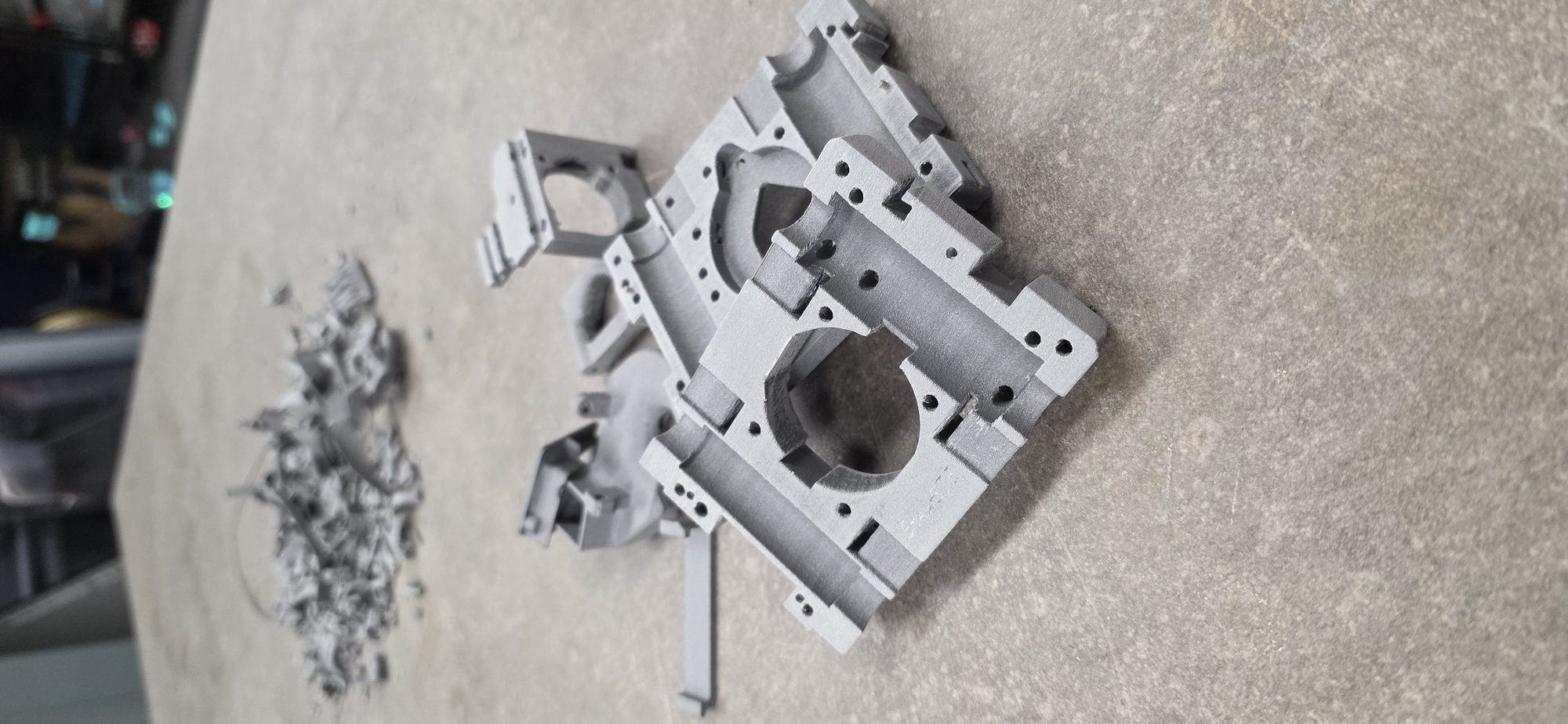
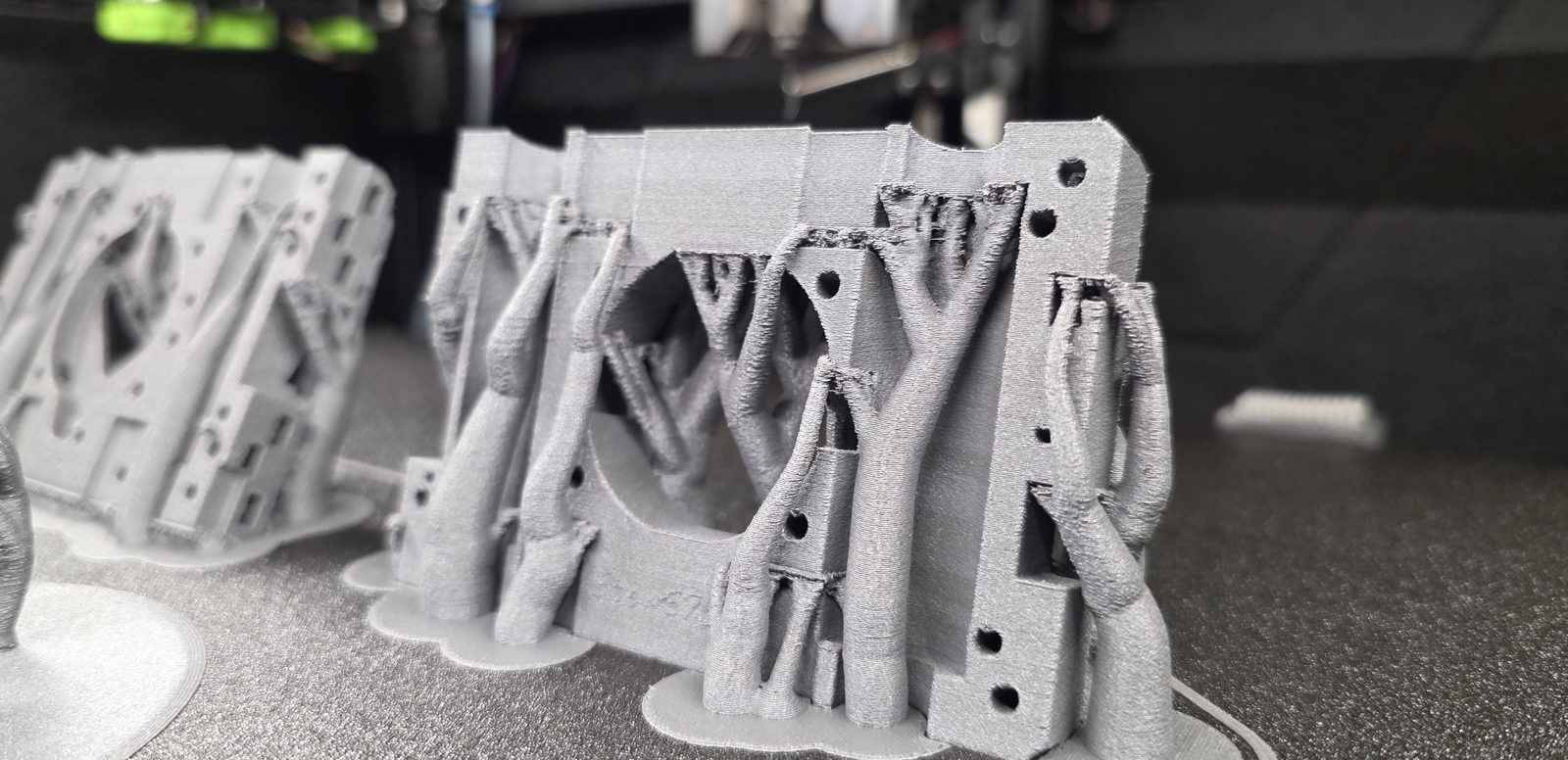
Fresh off the printer, in PPS-GF.

Grey printed carrier part with several mounting holes and a large round bore, fresh off the printer with leftover support material beside it.
Carrier part in PPS-GF, fresh off the printer.
A batch of grey PPS-GF parts on the print bed, tree supports still attached, straight off the printer.
A batch of PPS-GF parts, support structures still attached.

Typical work: pump and valve parts, guides in cleaning lines, fixtures that ride through a bath, rigid clamshells that hold their shape under pressure and high temperature, and replacements for machines where the original polymer gave out.

If you are unsure between PPS and something cheaper, say what the part has to withstand: temperature, fluid and load. That decides it more than the shape does.

A part that has to face heat or chemicals?

With a 3D file, the quote tool shows your price straight away. Just a photo with dimensions? Email it to info@nworks3d.be and you will hear whether PPS is the right choice.